AI Visibility: How to Use Generative AI Without Losing Search Presence
AI visibility is about making AI-created assets discoverable, credible, and resilient in search. This means aligning AI output with structured data, human review cycles, and measurable quality thresholds so content ranks and converts rather than triggering algorithmic discounting or manual actions.
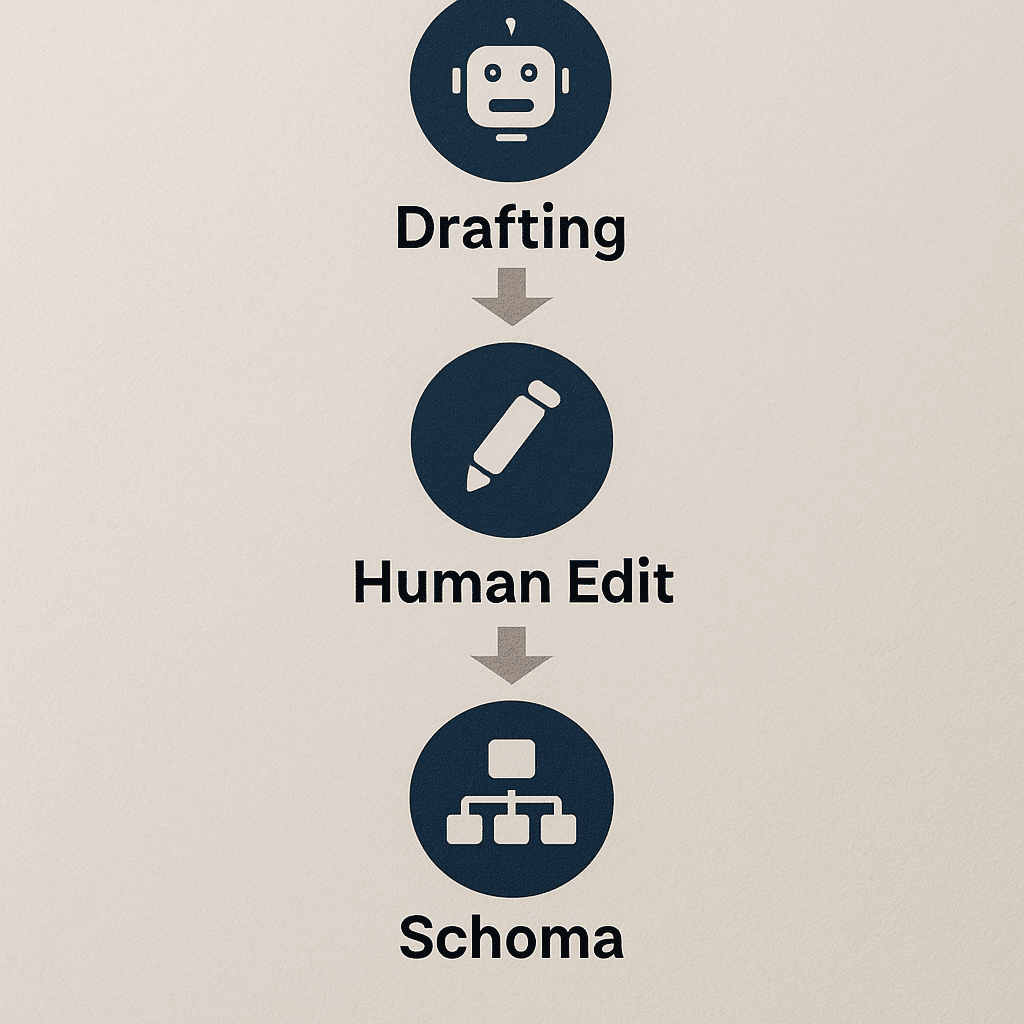
By the end you will be able to pick a practical workflow for introducing AI into your content stack, test whether AI output is helping or harming organic visibility, and ask vendors the exact questions that separate competent providers from risky ones. I write from hands-on SEO operations: what we usually see when teams push unvetted AI content, the simple tests that catch failure modes, and the technical guardrails that protect ranking signals.
How to decide whether to use AI content for visibility?
Deciding starts with mapping content roles to risk levels. Use AI for research drafts, meta generation, and internally facing copy. Be selective with public-facing pages that drive primary keyword traffic. The choice is not binary; it’s a spectrum tied to page intent, conversion value, and maintainability.
Short answer: Use AI for scalable, low-risk content (internal briefs, outlines, first drafts) and only publish AI-first pages after structured human editing and validation against conversion and quality thresholds.
Why that matters: pages that directly affect monetized queries — product pages, cornerstone articles, category pages — carry higher cost of failure. What actually happens is teams treat AI output as publish-ready when it is only rough research. The operational trick is to tag each page type by risk: low, medium, high. Assign a review depth to each tag — for example low-risk gets light human proofreading, medium-risk requires an editor plus schema markup, high-risk requires subject-matter expert review and A/B testing against control pages.

Three technical signals search engines use to detect low-value AI content
Search engines don’t have a secret ‘AI’ stamp. They rely on structural and behavioral signals. If you control those signals, you control how safely AI content behaves in the index.
Signal 1 — Cross-site pattern matching. Engines detect when near-identical answers appear across many domains, which reduces perceived uniqueness. In practice we see duplicate phrasing from the same prompts get downgraded faster than traditional copy-paste duplication because it shows a generative pattern rather than source-based citation.
Signal 2 — Engagement and pogo-sticking. If users land and immediately return to results, pages lose rank momentum. That’s standard, but with AI drafts this happens sooner because surface-level answers satisfy intent superficially without offering depth, triggering faster negative feedback loops.
Signal 3 — Structural weakness. Pages lacking Schema.org structured data, clear author or revision metadata, and internal linking patterns aligned with site taxonomy are more vulnerable. Using structured data and author/revision fields signals curation and provenance, which search systems use to assess expertise.

Operational workflow: integrating AI without hurting rankings
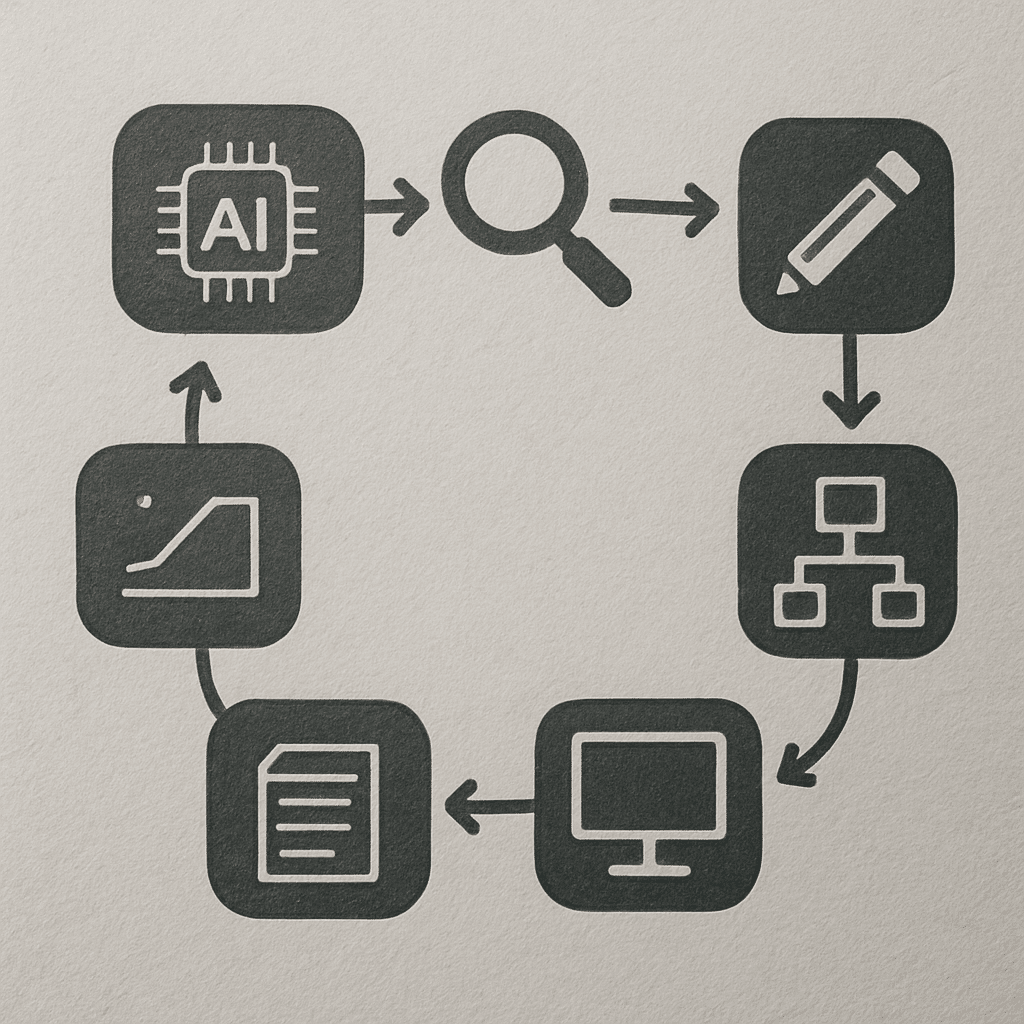
Here is a reproducible workflow we run on high-stakes sites. It forces visibility checks before a page goes live, and it separates production from publication.
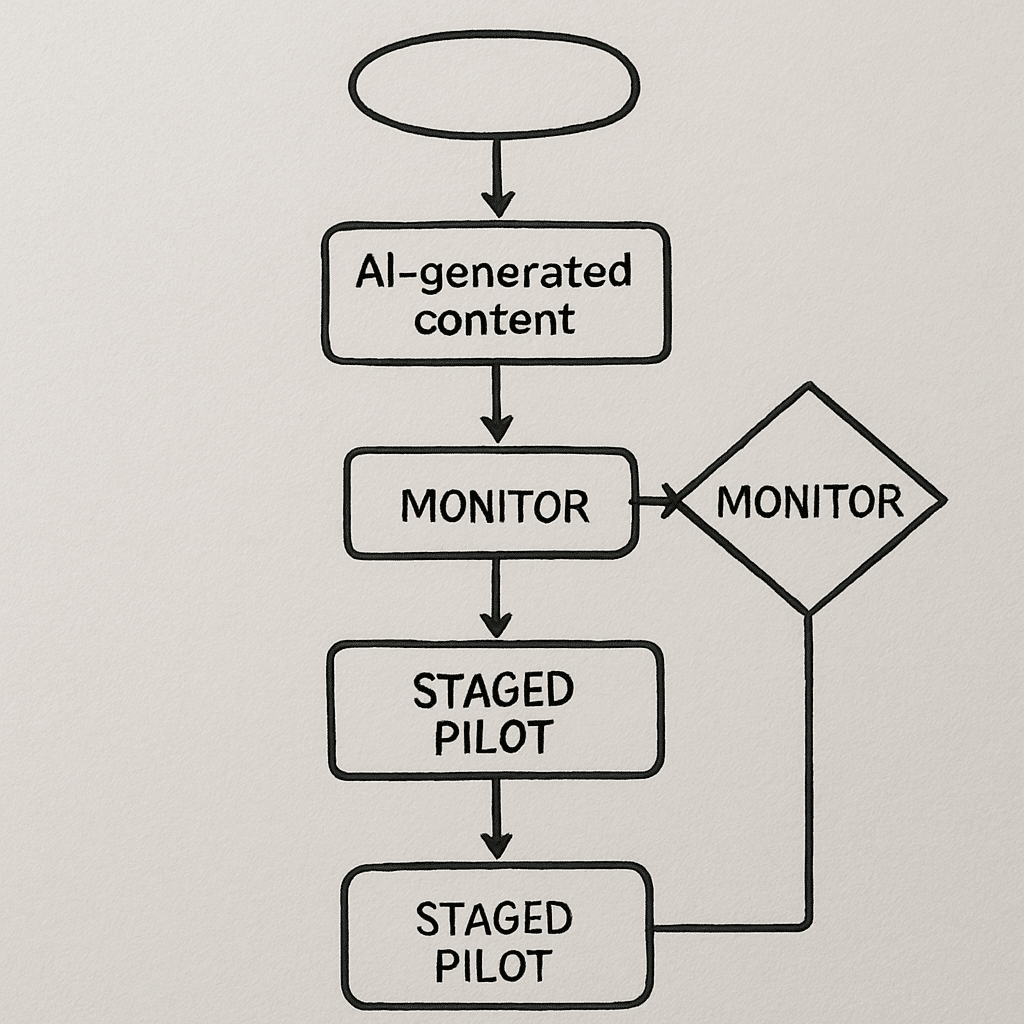
- Prompted draft: generate outline and draft with controlled prompts that require sources and citations.
- Evidence pass: require at least two distinct source links for every factual subsection; mark any unverifiable claim for deletion.
- Human edit pass: editor rewrites intro and conclusion, verifies unique examples, and injects brand voice.
- Schema and metadata: implement appropriate Schema.org types and author/revision metadata; add structured FAQ only after human-verified Q&A.
- Staged publish with monitoring: publish to a staging subfolder or subdomain and monitor organic metrics for a minimum observation window before main indexation or internal linking boosts.
In practice, a realistic constraint is resources. For a small team working on a 30-page product microsite in Phoenix with limited dev bandwidth and a 3-month rollout, the compromise is to run AI on 20 of those pages as drafts but only publish 5 at a time after the full workflow. That stagger reduces risk and creates clear A/B comparisons.
Two numeric thresholds we use operationally: whiteboard review cycles should be 2 to 5 iterations before publish, and Core Web Vitals targets should match site baseline, aiming for Largest Contentful Paint under 2.5 seconds to avoid adding UX-based ranking disadvantage. The why: ranking systems combine content relevance and page experience; improving one without the other still leaves you exposed.
Tools and specs: use Schema.org for structured data, validate with Google’s Rich Results Test, and align risk procedures with the NIST AI Risk Management Framework as a governance reference. For production workflows, we use version control in the CMS and a tracked approval gate so every AI edit has a clear human signer.
Common failure modes and their consequences
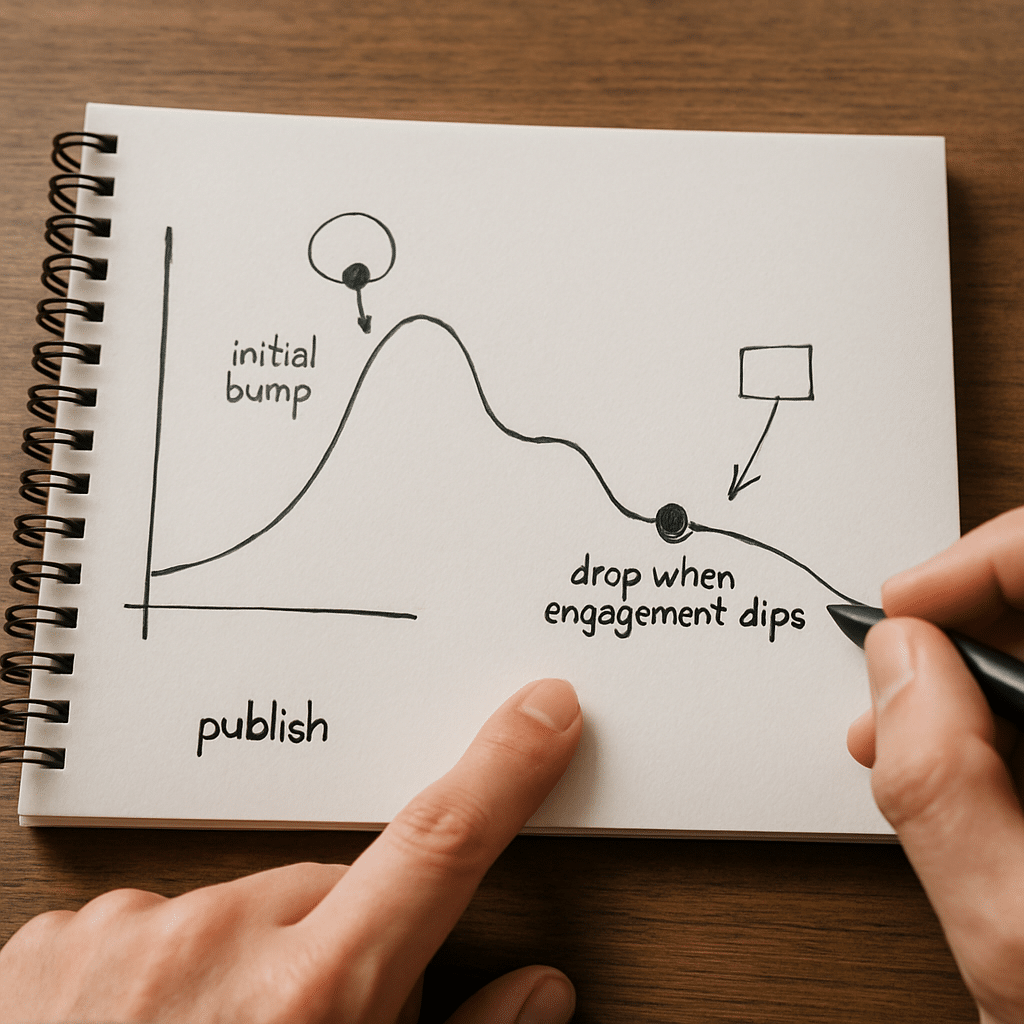
Failure mode: Publish-first, verify-never. Consequence: rapid ranking decay and slow recovery. What we usually see is an initial traffic bump from new content, followed by a plateau or drop when user engagement metrics show the page doesn’t satisfy intent.
Failure mode: Boilerplate cloning. Many vendors push a single prompt across dozens of sites. Engines detect repeated answer patterns, which reduces the effective uniqueness signal and can lead to devaluation of entire clusters. The consequence is that not just the published pages but similar topical pages within your site lose trust until you inject genuine expertise or original data.
Failure mode: Missing provenance. Pages without author, revision dates, or clear sources score lower on perceived trustworthiness, especially for YMYL topics. Consequence: manual reviewer attention or algorithmic downgrades on high-risk queries.
How to test for these failure modes: run a duplicate-phrasing check across the web using exact-match sentence search, perform user-testing sessions to capture satisfaction signals, and validate that every factual claim has an inline, verifiable source.
What metrics and tooling show AI visibility is working?
Short answer:
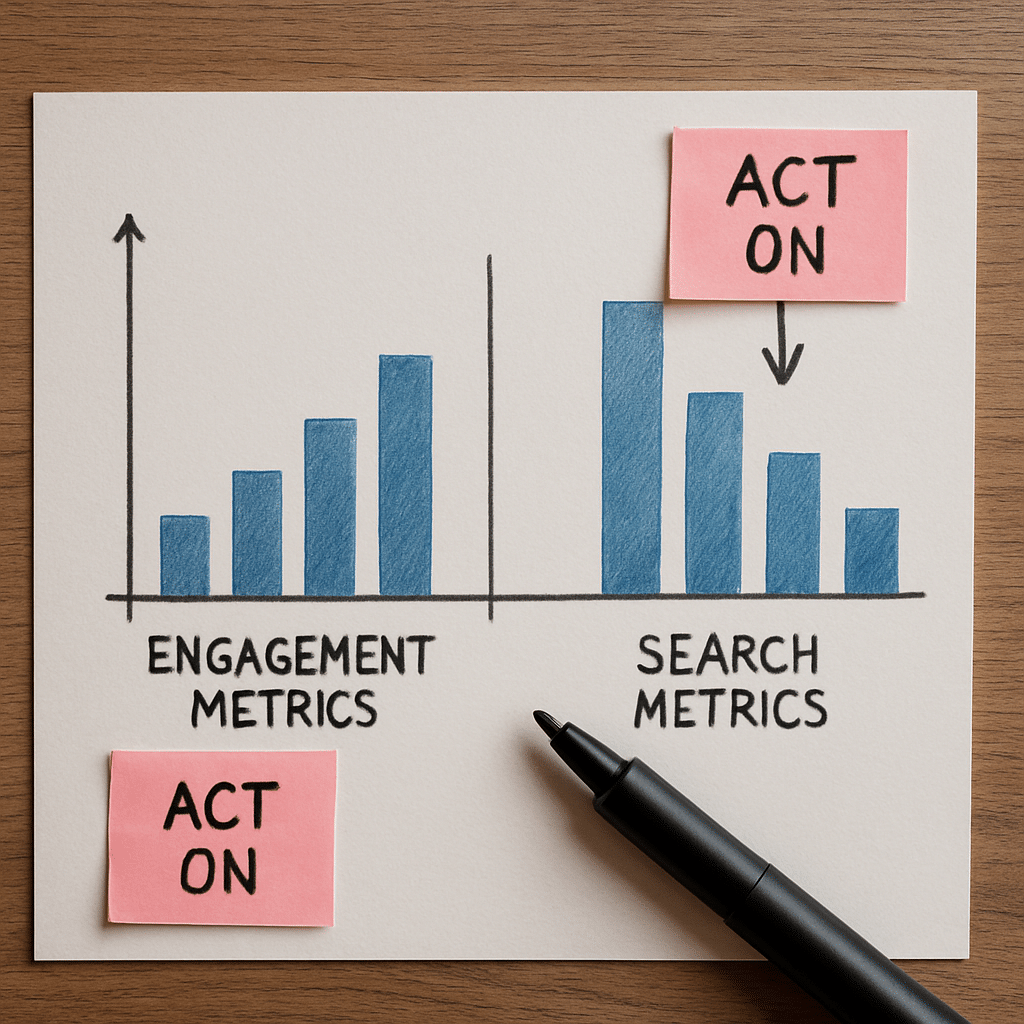
Short answer: Combine intent-aligned engagement metrics (time on page, task completion) with search signals (impression-to-click ratio, ranking stability) and provenance checks (structured data coverage and citation density) to determine whether AI content improves visibility.
Detail: Impression and click changes tell you whether the page is discoverable. Ranking stability over several weeks indicates resilience. Engagement metrics reveal satisfaction — if time on page and scroll depth stay flat while clicks rise, the content likely attracts attention but fails to satisfy intent. Add a provenance layer: percentage of paragraphs with verifiable sources and presence of Schema.org markup.
Recommended tooling: Search Console for impressions and clicks, server logs for crawl behavior, and internal analytics for engagement. Add a lightweight content-uniqueness tool that computes sentence-level similarity across a web crawl to detect cross-site pattern matching. For governance, map findings to the NIST AI Risk Management Framework controls so your audit trail aligns with an accepted standard.
Red flags to watch for and questions to ask vendors
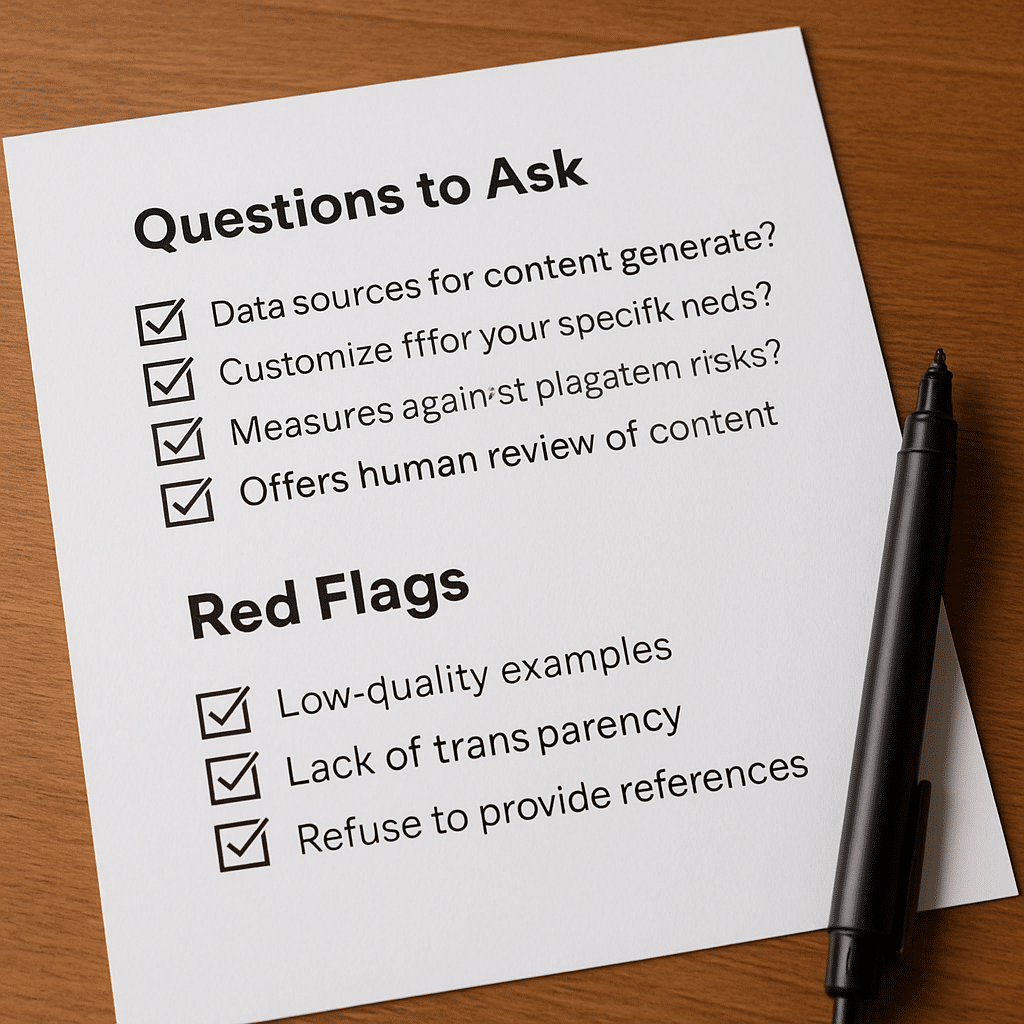
When you evaluate vendors, ask concrete operational questions rather than marketing fluff. Good vendors will have measurable guardrails; poor vendors will default to volume and quick publish.
- Ask: Do you produce source-linked drafts, or do you deliver final HTML? If they deliver final HTML without sources, that’s a red flag.
- Ask: What human QA process do you apply and how many human editorial minutes per page? If they cannot specify an editor pass, treat the work as high-risk.
- Ask: Can you provide a staging URL and a control A/B test? Vendors who avoid staged testing are unwilling to be measured.
- Ask: How do you handle updates to factual content? For anything time-sensitive, insist on a scheduled review window and a version history entry in CMS.
Also watch for these red flags in deliverables: identical phrasing across sections, lack of inline citations, no structured data, and missing author or revision metadata. If a vendor recommends mass publishing hundreds of pages in a single day without gradual monitoring, treat that as a failure-mode trigger.
Practical vendor comparison: weigh cost against review depth. A lower-price vendor that promises mass output but no human editorial minutes will usually shift risk back to your internal team and cost more in remediation later. If you want help beyond strategy, DIQSEO can assist with staged rollouts and landing page optimization, or you might engage a specialist for creative assets like short form video content services in Florida to boost engagement alongside AI-written pages.
For technical SEO integration and page design that supports AI visibility, consider working with an SEO Agency In Florida for search tactics and a Landing Page Design Agency In Florida for conversion-focused templates. If your brand messaging needs tightening before mass publishing, a Brand Messaging Consulting Services In Arizona can help ensure voice and claims are defensible.
Frequently Asked Questions
Can search engines detect AI-written content?
Short answer: Search engines do not label content as AI-written publicly, but they evaluate signals like duplication, engagement, and provenance that commonly correlate with low-quality AI output.
To go deeper, search systems combine pattern detection across the web with user behavior signals and structural metadata. That means AI content can perform well if it is unique, well-sourced, and satisfying to users; the risk is the patterns AI tools produce when used at scale without human curation.
Do I have to disclose the use of AI on my site?
Short answer: Disclosure is not universally mandated for all content types, but transparency builds trust and can reduce manual reviewer friction for sensitive topics.
To go deeper, regulatory expectations vary by industry and jurisdiction. For high-trust areas like medical or legal, add provenance, author credentials, and revision notes. Use visible author or editorial bylines and a dedicated disclosure section when AI contributes materially to content creation.
How fast will I know if an AI page harms rankings?
Short answer: Early warning signals can appear within days as click-through rates and bounce behavior change; statistically significant ranking shifts usually show within several weeks.
To go deeper, monitor impressions, clicks, and ranking positions daily for the first two to four weeks after publishing. If impressions climb but CTR or time-on-page drop, pause the rollout and run a deep content review against the workflow checkpoints described earlier.
Which structured data types matter most for AI visibility?
Short answer: Article, FAQ, and Product schema improve provenance and can surface rich results; author and review metadata are essential for expertise signals on higher-risk pages.
To go deeper, implement Schema.org types that match page intent and validate with Google’s Rich Results Test. Including author and revision data under schema shows human oversight and helps search systems evaluate trustworthiness.
Is there a safe scale for publishing AI content?
Short answer: Safe scale is determined by your monitoring capacity and quality gates; staggered rollouts and batch sizes tied to your editorial review capacity reduce systemic risk.
To go deeper, instead of publishing hundreds of pages overnight, stage releases in batches and compare KPIs against control pages. If your team can complete 2 to 5 editor review cycles per page within your SLA, you can increase batch size responsibly.
What are practical next steps for a small business with limited resources?
Short answer: Start with a pilot of 5 to 10 pages, apply the full workflow, measure engagement and ranking signals, and use those results to fund or stop further rollout.
To go deeper, pick lower-risk content for the pilot such as resource pages or FAQs, include Schema.org markup, and monitor for engagement and stability. If positive, expand to higher-value pages with increased human oversight.
Evaluation checklist: what to look for before you publish
- Source-linked paragraphs, not generic assertions — cause: shows verifiability, effect: raises trust, consequence of omission: higher devaluation risk.
- Human editorial minutes per page documented — cause: proof of review, effect: fewer factual errors, consequence of omission: repeated corrections and traffic loss.
- Structured data implemented and validated via Google’s Rich Results Test — cause: signals provenance, effect: increases chance of rich snippets, consequence of omission: lower SERP visibility.
- Staging publish with monitoring window and rollback plan — cause: containment of unknowns, effect: reduces blast-radius, consequence of omission: mass traffic decline if content fails.
- Vendor answers to the red-flag questions above — cause: transparency, effect: measurable accountability, consequence of omission: vendor lock-in and remediation costs.
Operational CTA: If you want a practical pilot framework and governance template, start with a five-page staged pilot under the workflow above. If your project needs creative lift alongside search optimization, combine content work with conversion-focused landing design and distribution — for example, pair AI-written pages with creative assets from a Graphic Design Agency In Arizona or a staged webinar to boost dwell time using Webinar Marketing Services In Arizona.
Authoritative references and further reading
Read Google’s guidance on auto-generated content and search quality at Google Search Central, and align your governance with the NIST AI Risk Management Framework. For structured data implementation, consult Schema.org and validate with Google’s Rich Results Test.
Image failed to generate
Infographic — comparison chart showing recommended governance controls vs typical vendor promises
canceling statement due to statement timeout
Final takeaway
The single most useful action: don’t treat AI as a publishing shortcut. Treat it as a drafting tool inside a gated workflow that requires source verification, human editorial sign-off, structured provenance, and staged publishing with monitoring. That sequence turns AI from a ranking risk into an efficiency multiplier.
Next step: run a five-page pilot under the workflow above, instrument the pages for impressions, CTR, and engagement, and compare against existing high-value pages. If you want help building that pilot or aligning brand messaging before scale, DIQSEO can consult on strategy and execution, including staged content rollouts and conversion design.